
April 29, 2026
To the uninitiated, science carries an elusive, almost amorphous quality. How could it not? Science spans from infinite galaxies to microscopic nanoparticles. At the same time, the field is often reduced to the purity of "exact science" and the rigid structures of the "Scientific Method." Yet viewing science as a highly controlled process ignores the everyday reality of the discipline. If we shine a light on a scientist's daily work, we might see something less structured and more artful. As Ana Coppinger, one of A49’s laboratory specialists behind the UBC School of Biomedical Engineering puts it, science is an incredibly creative field. Discovery relies on stimulus. It depends on spaces that make people feel good, help them think clearly, and encourage them to explore ideas from new angles. That belief shaped the laboratories designed for the school and echoes throughout the building designed by Patkau Architects.

BUILDING A CULTURE OF SHARED DISCOVERY
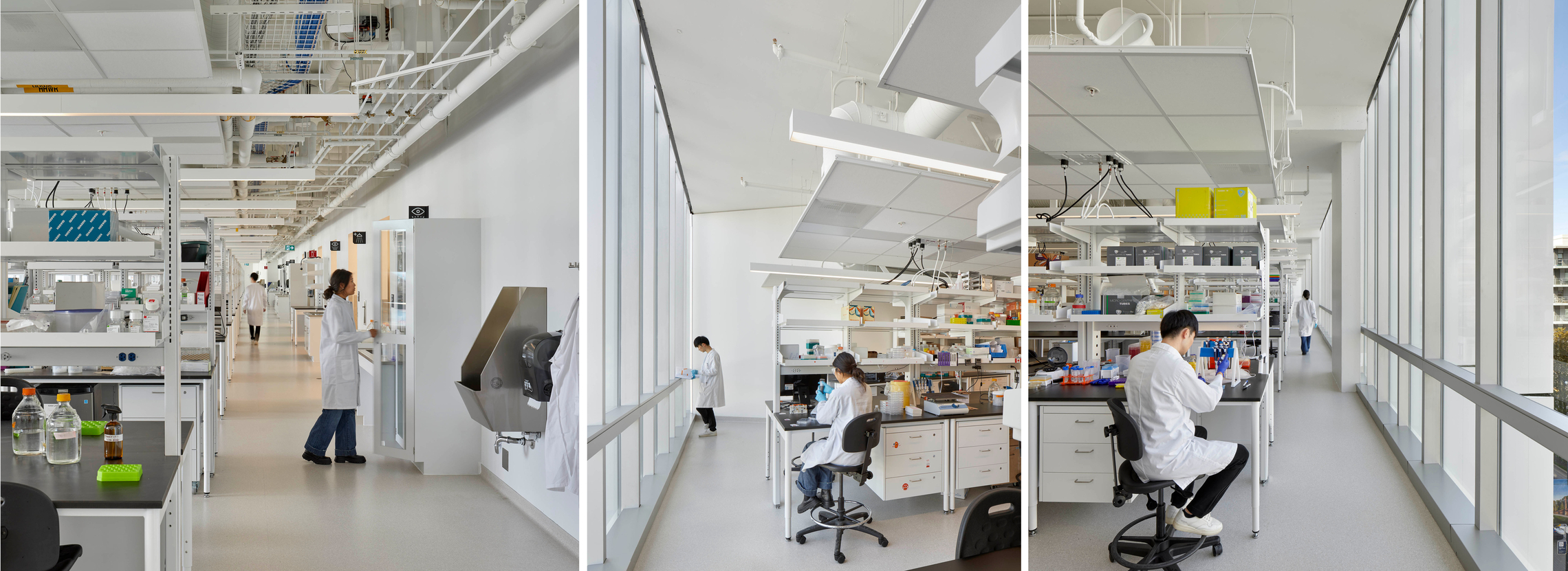
From the beginning, the design team focused on creating communities for science. Instead of isolating researchers in enclosed, windowless rooms, the laboratories at SBME were intentionally planned to move away from a culture of ownership and isolation toward one of shared resources and collective discovery. Open, visible, and connected, the labs encourage proximity and transparency, allowing ideas to circulate informally through daily presence and interaction. Here, science is on display. Work is visible, activity is felt, and students moving through the building are surrounded by the discipline they are learning, experiencing science not as something hidden away, but as a shared academic resource.
That shift toward openness and shared scientific culture reflects a broader evolution in laboratory design. As disciplines increasingly overlap and technologies advance at a rapid pace, lab environments must support collaboration, adaptability, and change. At SBME, this meant designing spaces that could accommodate shifting research priorities without costly renovations, allowing researchers to integrate new tools, equipment, and methods as they emerge. Flexibility, in this context, is not an abstract ideal, but a practical response to the speed at which science now moves.
FLEXIBLE LABS WITH DAYLIGHT AND CONNECTION
A major part of that connectivity comes from an early design decision to position laboratories along the building’s north elevation, with an open, floor-to-ceiling facade. The workbenches are pulled away from the glass, turning the perimeter into a shared space that provides room for collaboration and unobstructed campus views. The light from the north is glare free, which is ideal for both instrumentation and for those spending long hours at their bench.
Beyond technical performance, the generous glazing and views were seen as essential to the human experience of working in a lab, reinforcing the idea that comfort, daylight, and visual connection contribute directly to clear thinking and sustained focus.
ADAPTABILITY, PARTNERSHIPS, AND LEARNING BY PROXIMITY
Rather than over‑building fixed infrastructure, the planning approach prioritized adaptability, ensuring that new technologies could be introduced, tested, and shared without extensive renovation. This enables collaboration not only across academic disciplines, but also with industry and research partners, supporting experimentation and innovation as scientific methods continue to evolve.
The building reinforces that philosophy at every scale. Its atrium, maker spaces, teaching labs, and informal gathering areas blur boundaries between academic learning and research practice, bringing scientists, students, and industry partners into a single interconnected environment. Together, these spaces form an animated neighbourhood that reflects the increasingly fluid relationship between science, engineering, and education.
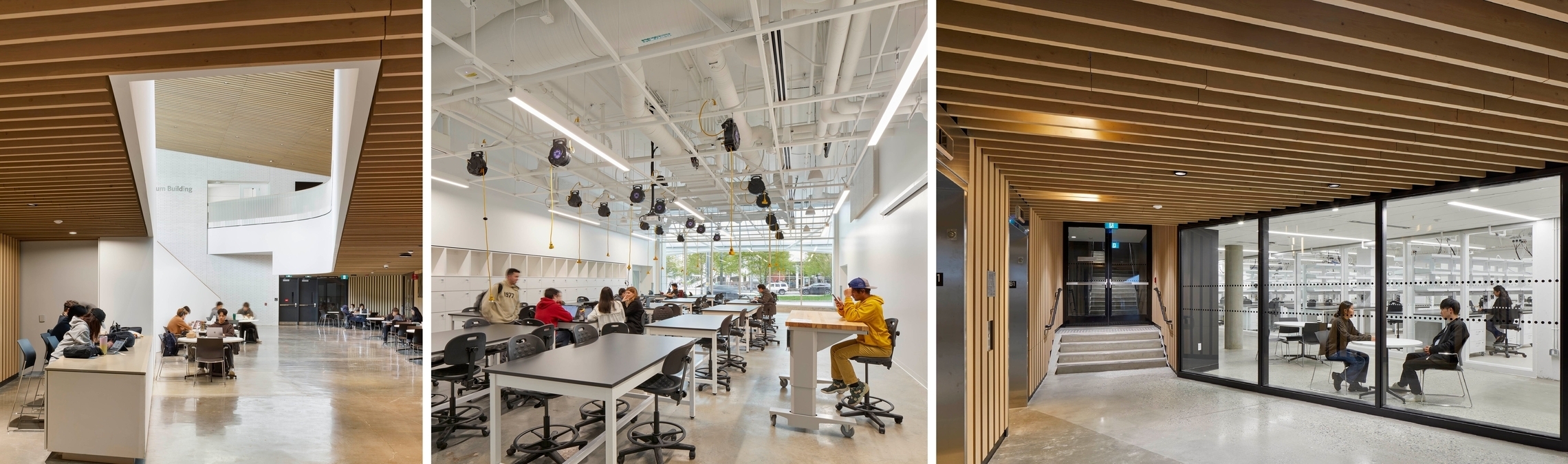
Visibility plays a central role in this experience. By making research activity visible throughout the building, the design supports what Ana describes as “unplanned education,” where students encounter science informally as they move through the space. This incidental exposure extends learning beyond the classroom, helping students understand the breadth of scientific inquiry and imagine where they might fit within it.
For Ana, the project represents a rare alignment between technical rigour and architectural expression. Through close collaboration with Patkau Architects, the lab planning framework was fully respected and integrated, allowing the laboratories to achieve both scientific precision and artistic quality. The result is a building where complex technical requirements and architectural ambition reinforce one another, creating an environment that supports science not only as a discipline, but as a creative and human endeavour.