
January 26, 2026

The Sidney Centre for Plant Health has officially achieved LEED Gold certification, marking an important milestone for a project designed to support federal research and strengthen Canada’s capacity in plant health science. The certification recognizes the project team’s commitment to energy performance, climate resilience, and long‑term operational efficiency.
Located in Sidney, BC, the 62,400 sq. ft. facility brings together laboratory, office, and greenhouse functions to support the Canadian Food Inspection Agency’s work in plant health. From the outset, the project was guided by the Greening Government Strategy and Labs Canada design standards, with teams working toward federal and provincial sustainability goals and the LEED v4 BD+C: New Construction framework. The result is a purpose‑built research environment that strengthens Canada’s science capacity while aligning with national commitments to low‑carbon, resilient design. It was also shaped by federal net‑zero carbon objectives, with systems and materials selected to support long‑term reductions in carbon emissions.
One of the most distinctive features of the project is its use of geothermal energy for cooling as well as heating. While geothermal systems are commonly associated with low‑carbon heat, the Sidney facility also draws on stable underground temperatures to provide efficient cooling throughout the year. This dual use reduces reliance on conventional mechanical systems and plays a major role in lowering operational carbon. It’s an approach that remains uncommon in Canada, and reflects the team’s commitment to strategies that support both climate goals and long‑term performance. A full life‑cycle assessment further guided material choices to help reduce embodied carbon, complementing the project's geothermal strategy and supporting its long‑term sustainability goals.
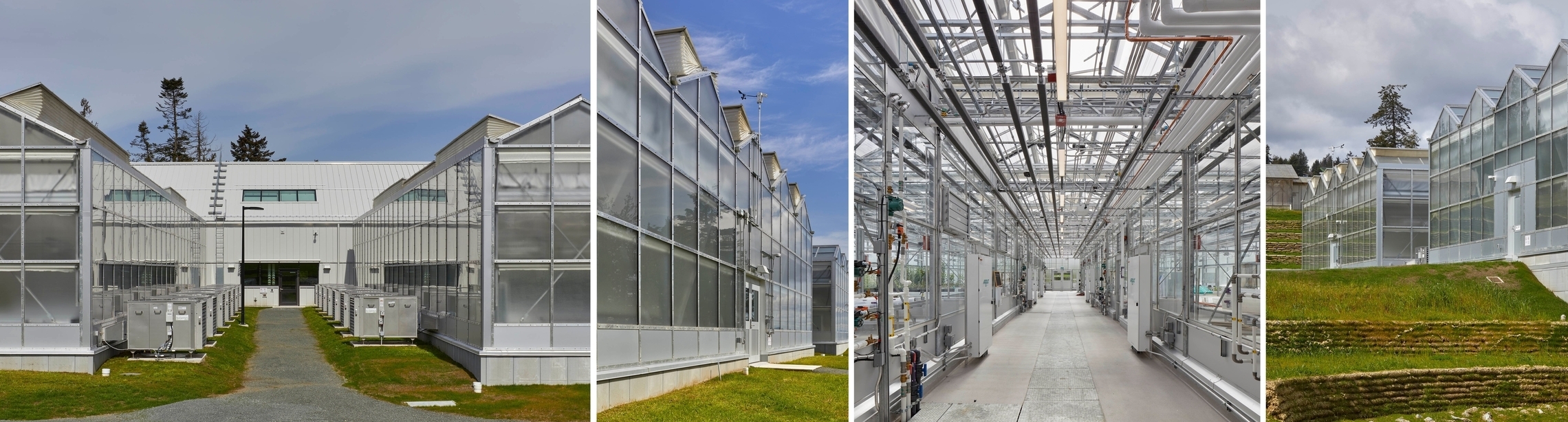
Water conservation is another important part of the project’s sustainability strategy. The facility targets a 40 percent reduction in water use through efficient fixtures and drought‑tolerant landscaping that reduces the need for irrigation. Outdoor areas were designed with the same balance of performance and people in mind, creating welcoming spaces with natural materials, biophilic elements, and room for informal gathering.
That emphasis on people‑focused design carries through inside. Workspaces and meeting rooms are organized to maximize daylight and views, supported by strong indoor air quality measures and comfortable thermal conditions. A daylit central stair encourages movement and connection between floors, while universal accessibility features ensure the building works for everyone. These indoor strategies build on broader climate‑resilient design measures incorporated throughout the project, reinforcing a healthy and adaptable environment for occupants.
With its LEED Gold certification, the Sidney Centre for Plant Health joins a growing network of Laboratories Canada facilities that pair scientific excellence with high‑performance, low‑carbon design. The project demonstrates how integrated analysis, resilient systems, and people‑focused environments can strengthen federal research infrastructure while advancing Canada’s sustainability commitments.