
February 24, 2026
For more than a decade, Architecture49 has been rethinking how school spaces can do more. Throughout Nova Scotia, our education projects have moved beyond traditional classroom layouts to embrace multipurpose environments where learning, gathering, and creativity coexist. The cafeteria, once a single-purpose space, has evolved into a flexible setting for lunch, assemblies, presentations, and performances alike, a shift that continues to shape how we design for education today.
At Halifax Peninsula PP–8 School, that philosophy takes physical form. Designed for both the school and the surrounding community, the cafeteria adapts throughout the day and year, supporting dining, informal learning, gathering, and professional performances. It stands as one of the most versatile environments A49 has designed within a K–12 setting.
A Space Designed to Adapt
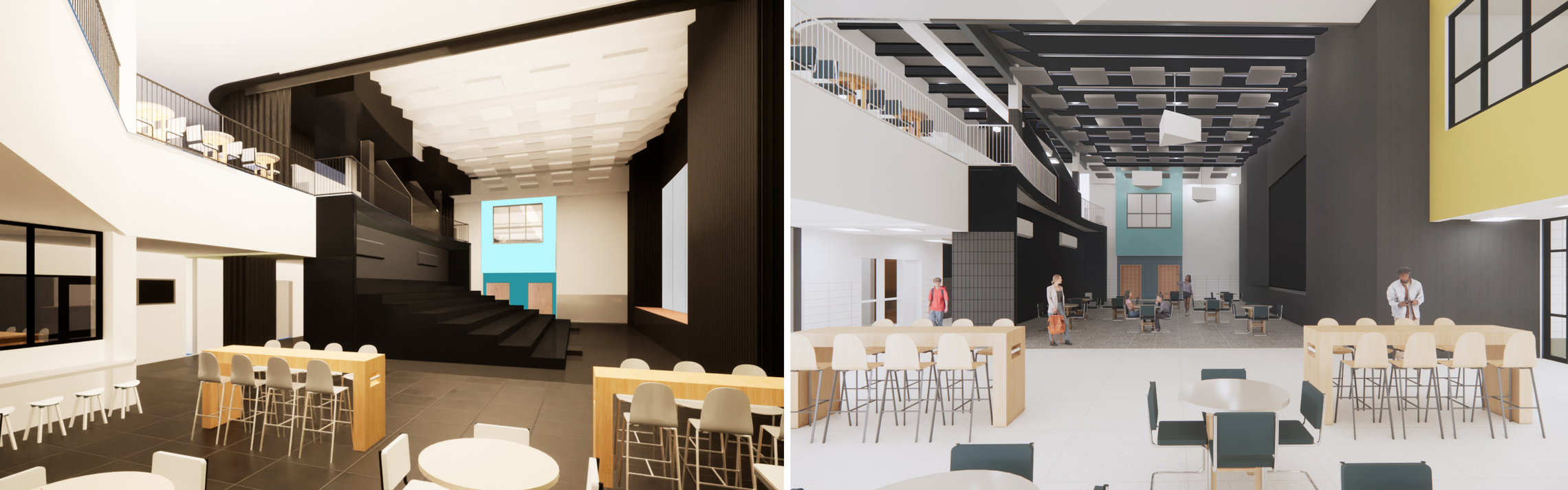
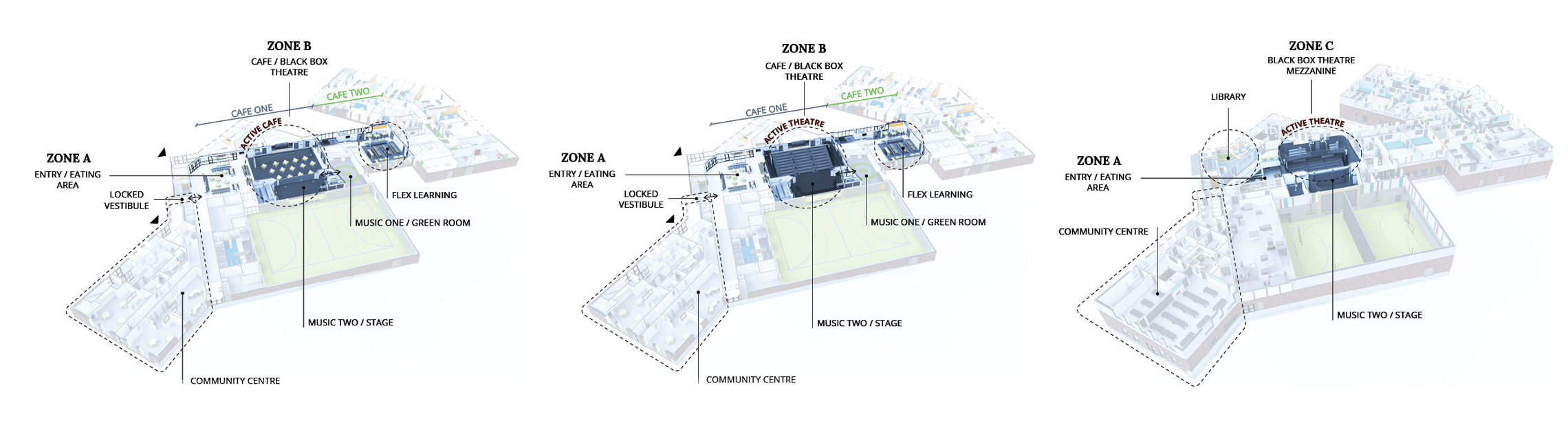
Centrally located within the school, the cafeteria serves as a constantly active gathering space designed for both flexibility and connection. It’s composed of two adjoining areas; Café 1 and Café 2, that can function as one expansive zone or as separate, complementary spaces. Together, they form a versatile hub that adapts to the daily rhythm of the school and the needs of the surrounding community.
Café 1, the larger double-height space, supports the full range of activity. At lunchtime, it accommodates most of the school’s 700 students in an open, light-filled environment. With operable walls, retractable bleachers, and motorized curtains, it can quickly shift to host assemblies, presentations, and community gatherings. Acoustic treatments and automated equipment allow these transitions to feel seamless, ensuring each configuration feels purposeful and comfortably allows all other school functions to happen simultaneously.
Extending to the Community
The cafeteria’s flexibility was further expanded through collaboration with the adjoining community centre. The centre’s vision included the ability to transform the space into a black box theatre, prompting enhancements to lighting, acoustics, and seating systems. These shared investments give the school a high-quality space for assemblies and presentations while providing the community with a fully equipped venue for evening and weekend events. It’s an example of how thoughtful design and partnership can multiply the value of public space
Learning Beyond the Classroom
Beside the main cafeteria, Café 2 provides another layer of adaptability. Equipped with flexible furniture, projection and whiteboard surfaces, it converts easily into a classroom, meeting space, or informal learning area. During large events, it can operate independently, proof that flexibility can create opportunity without disruption.
Equally important to function is the atmosphere of the space. The design supports the full age range of students, from the youngest learners to middle schoolers navigating social independence. Seating options from high counters to soft booths give students choice, while open sightlines allow for clear supervision. These subtle details build comfort and belonging, turning the cafeteria into a social anchor as much as a physical one.
The Halifax Peninsula PP–8 School cafeteria builds on more than a decade of A49’s work designing adaptable educational environments. By layering uses and designing for collaboration, the team created a space that serves students and the wider community with equal intent. It’s a model for how flexibility, when thoughtfully applied, can extend the life and purpose of every square foot, turning an everyday space into one that connects people, ideas, and experiences.